
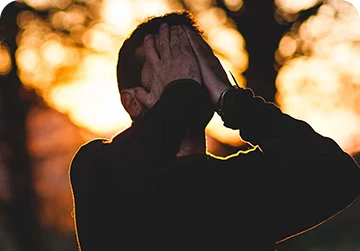
What If Change Isn’t Something to Fear, But Something Awakening?
Change rarely arrives gently.
It doesn’t knock, wait, and ask if you’re ready. It shows up uninvited, often in the middle of something ordinary, and quietly begins to rearrange everything you thought you understood about yourself.
In A Teen’s Journey: Good vs. Evil, Cara’s story begins the same way many of our own do: with a normal morning. Light slipping through curtains. Familiar routines. A new school year. Nothing extraordinary. And yet, beneath that surface, something is already shifting.
That’s what makes her journey feel real.
Because real change doesn’t always start with something dramatic, sometimes it starts with a feeling you can’t explain. A sense that something is different, even when everything looks the same.
The Quiet Beginning of Change
At first, Cara’s transformation isn’t loud or obvious. It’s subtle.
She feels nervous. Unsure. Pressured to figure out who she’s supposed to be. That’s something almost everyone recognizes. The weight of expectation. The quiet question in the back of your mind: Is this who I’m meant to become?
Then things begin to shift.
New friendships form. Music becomes more than just a class—it becomes a connection. A grounding force. Something that helps her feel steady when everything else feels uncertain.
But even then, something deeper is building.
A presence she can’t explain. Moments that don’t make sense. A feeling that her life is moving toward something bigger, whether she’s ready or not.
That’s the turning point many people experience in real life, too. That moment when things stop feeling predictable. When your identity starts to stretch beyond what you’ve always known.
When Change Becomes Impossible to Ignore
As Cara’s story unfolds, change stops being quiet.
It becomes visible. Tangible. Unavoidable.
The hooded figure. The strange energy. The realization that something inside her is waking up. Not just emotionally, but physically. Power. Instinct. Something ancient and unfamiliar.
And here’s where the story becomes more than just fantasy.
Because while most people won’t wake up with supernatural abilities, many do experience moments where they feel like they are no longer the same person they used to be.
- The version of you before the loss
- The version of you before pressure
- The version of you before everything shifted
There’s a point where you look at yourself and think, I don’t fully recognize who I’m becoming.
That can be terrifying.
Cara feels it too.
The fear of losing control. The fear of hurting the people she cares about. The fear that whatever is changing inside her might separate her from the life she once knew.
The Fear Isn’t the Change — It’s the Unknown
What makes change so overwhelming isn’t always the change itself. It’s the uncertainty that comes with it.
Cara doesn’t know what she’s becoming. She doesn’t understand her abilities. She doesn’t know who to trust. Even her closest friendships begin to strain under the weight of what she’s going through.
And that mirrors real life more than we often admit.
When people grow, evolve, or go through something intense, relationships shift. Not because anyone is doing something wrong, but because change creates distance before it creates understanding.
There’s a moment where you feel alone in your transformation.
Cara reaches that moment.
She starts to pull away. Not because she wants to, but because she believes she has to. Because she’s afraid of what might happen if she doesn’t.
That instinct—to isolate, to protect others by stepping back—is something many people recognize, even outside of fiction.
What If Change Is Actually a Signal?
Here’s where the story offers something deeper.
What if change isn’t something breaking you… But something is revealing you?
Throughout Cara’s journey, there are hints that what’s happening to her isn’t random. The music. The energy. The connection to something bigger. It all points to the idea that her transformation has purpose.
Even when it feels chaotic.
Even when it feels out of control.
In real life, we rarely get clear answers about why we’re changing. But we do see patterns:
- Growth often follows discomfort
- Clarity often follows confusion
- Strength often appears after moments of weakness
Cara’s transformation reflects that pattern in a heightened, symbolic way.
Her abilities don’t just appear. They respond to emotion. To fear. To pressure. To identity. They are tied to who she is becoming, not just what is happening around her.
Awakening Isn’t Always Beautiful
There’s a common idea that growth is supposed to feel inspiring. Clean. Motivating.
But awakening often feels messy.
It feels like:
- confusion
- fear
- isolation
- intensity
Cara doesn’t experience her change as something easy. It disrupts her life. It complicates her relationships. It forces her to face parts of herself she doesn’t fully understand.
And yet, despite all of that, something important happens.
She doesn’t stop.
Even when she’s unsure. Even when she’s afraid. Even when she doesn’t have answers.
That’s what makes her journey meaningful.
The Real Question
So the question isn’t whether change is scary.
It is.
The real question is: what if that fear is pointing toward something important?
What if the moments where you feel most uncertain are the same moments where something inside you is waking up?
Not fully formed. Not fully understood. But real.
Cara’s story doesn’t suggest that change is easy or predictable. It shows the opposite.
But it also suggests this:
Change might not be the end of who you were.
It might be the beginning of who you’re becoming.
And sometimes, that beginning doesn’t feel like clarity.
Sometimes, it feels like everything is shifting at once.
Final Thought
We all have moments where life feels unfamiliar. Where we question who we are and where we’re going. Where something inside us feels different, even if we can’t explain why.
Cara’s journey takes that feeling and turns it into something visible. Something powerful.
But at its core, it reflects something deeply human.
Change isn’t always a threat.
Sometimes, it’s an awakening.
And the only way forward is to face it.